Small Living Room Organization: 10 Systems That Give You Space Back
Ten honest organization systems for a small living room, zones, hidden storage and vertical tricks that give real space back without buying a bigger sofa.
By SmallNestDecor Editors · October 18, 2026
A small living room does not have a space problem. It has a systems problem. The room is asked to be a lounge, an office, a dining room and a guest room, and without systems, all four jobs dump their belongings on the same three flat surfaces. The good news: organization scales down beautifully. These ten systems are the ones we see work again and again in real small living rooms, ordered from the Saturday-morning easy to the weekend project.
1. Give the room zones, then let the zones hold things
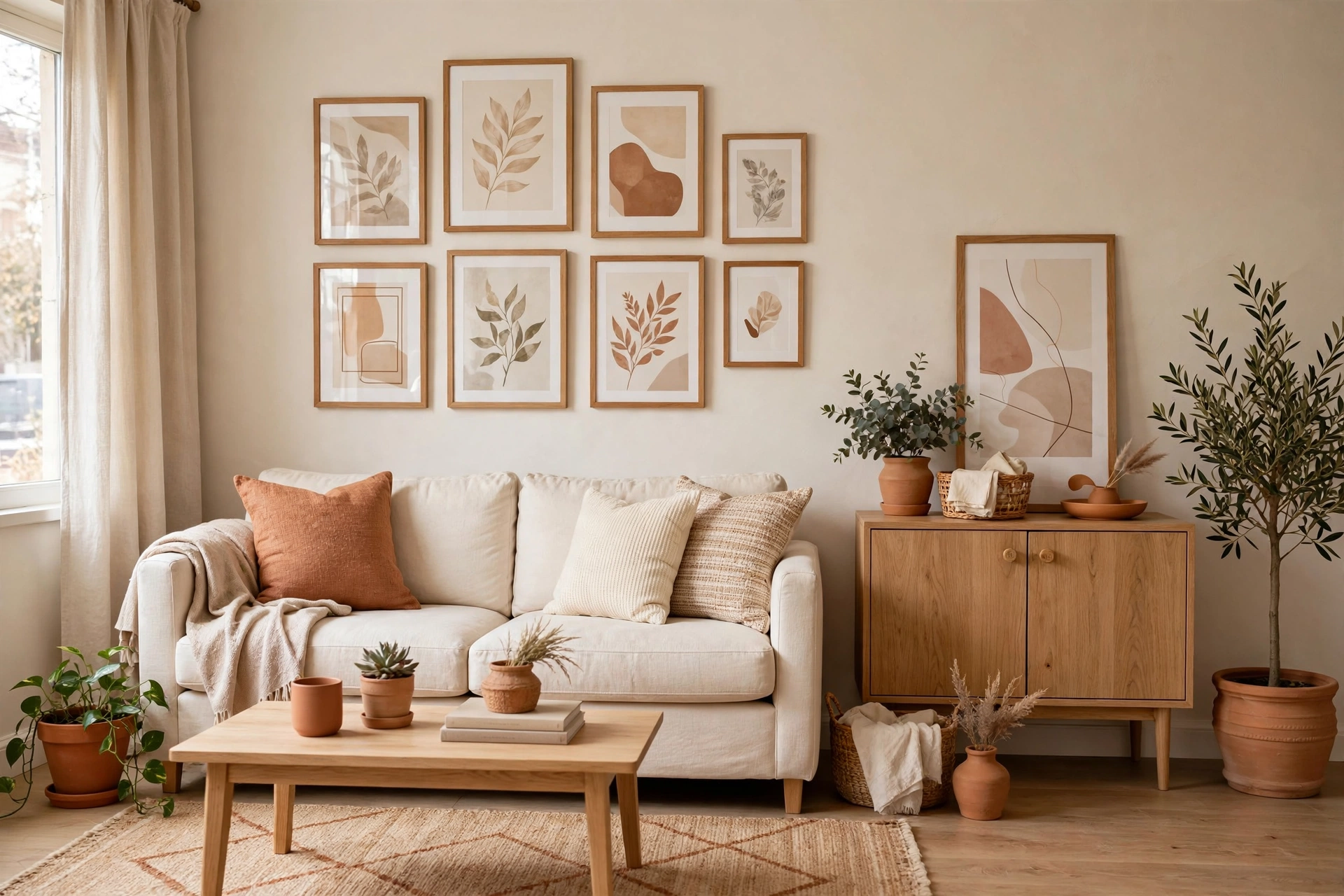
Organization starts with deciding what happens where. A rug under the sofa area says “lounging”; a small desk or console in the corner says “work”; a tray on the coffee table says “things land here, not everywhere.” Zones are not just visual, each zone gets its own storage, sized to its job. The work corner holds the laptop charger and notebook. The lounge zone holds the blanket and the remotes. When an item has a zone, it has a home, and homes are what stop clutter from wandering.
2. The tray rule for every flat surface
In a small room, a tray is not decoration, it is a boundary. Put a tray on the coffee table, the sideboard, the top of the bookshelf: anything inside the tray is allowed, anything outside it is not. The human eye reads a tray of six objects as one tidy object, and reads the same six objects loose as a mess. This is the cheapest system on this list and the one guests notice most.
3. One lidded basket per problem
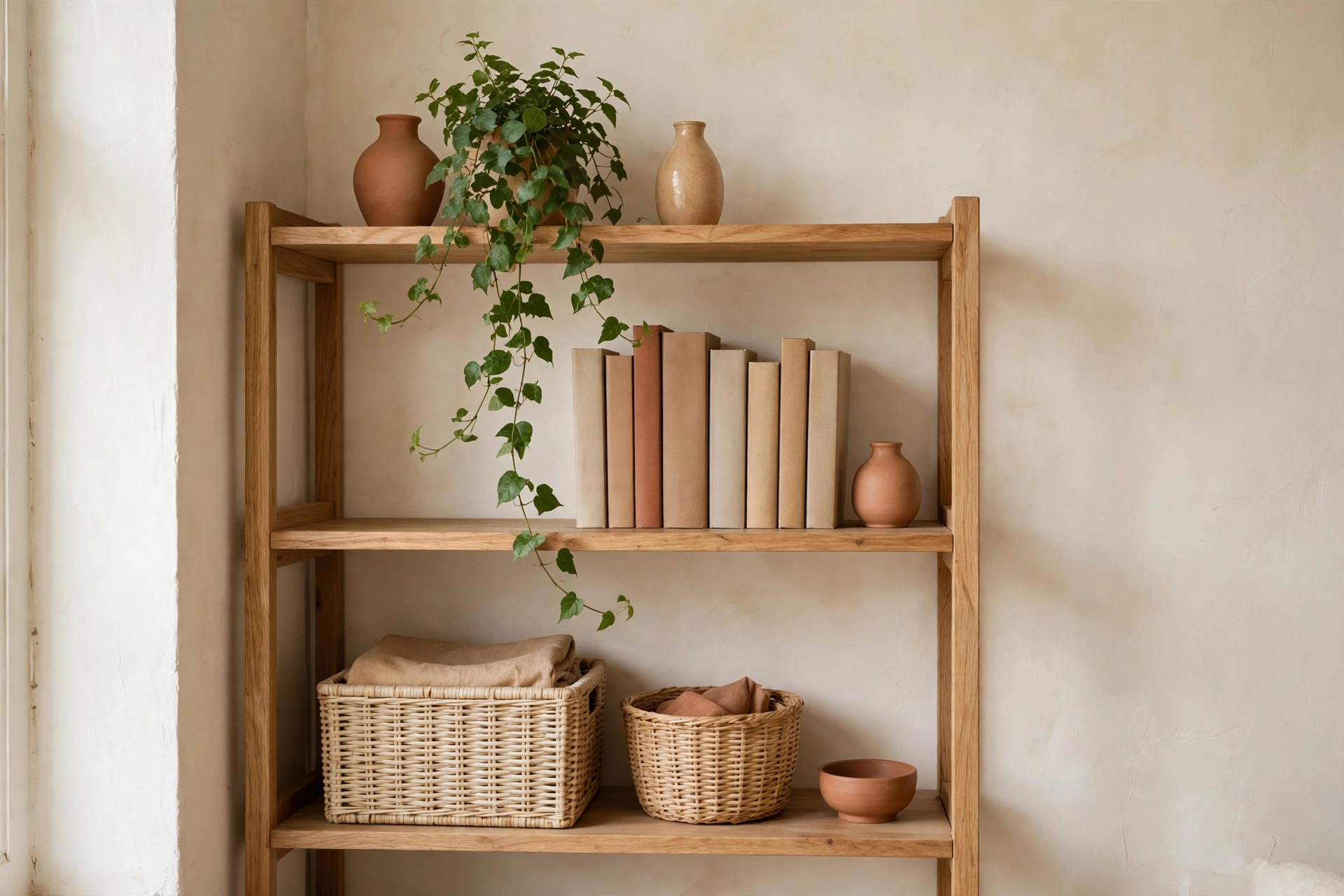
Forget the matching set of twelve baskets from the catalogue. Small rooms need three lidded baskets, each assigned to a single category that currently has no home: blankets, the daily drop (mail, chargers, remotes, the thing you are holding right now), and one deliberately empty basket that exists for the five-minute tidy before guests arrive. Lids matter. An open basket is a display of your clutter; a lidded basket is furniture.
4. Furniture that is secretly storage
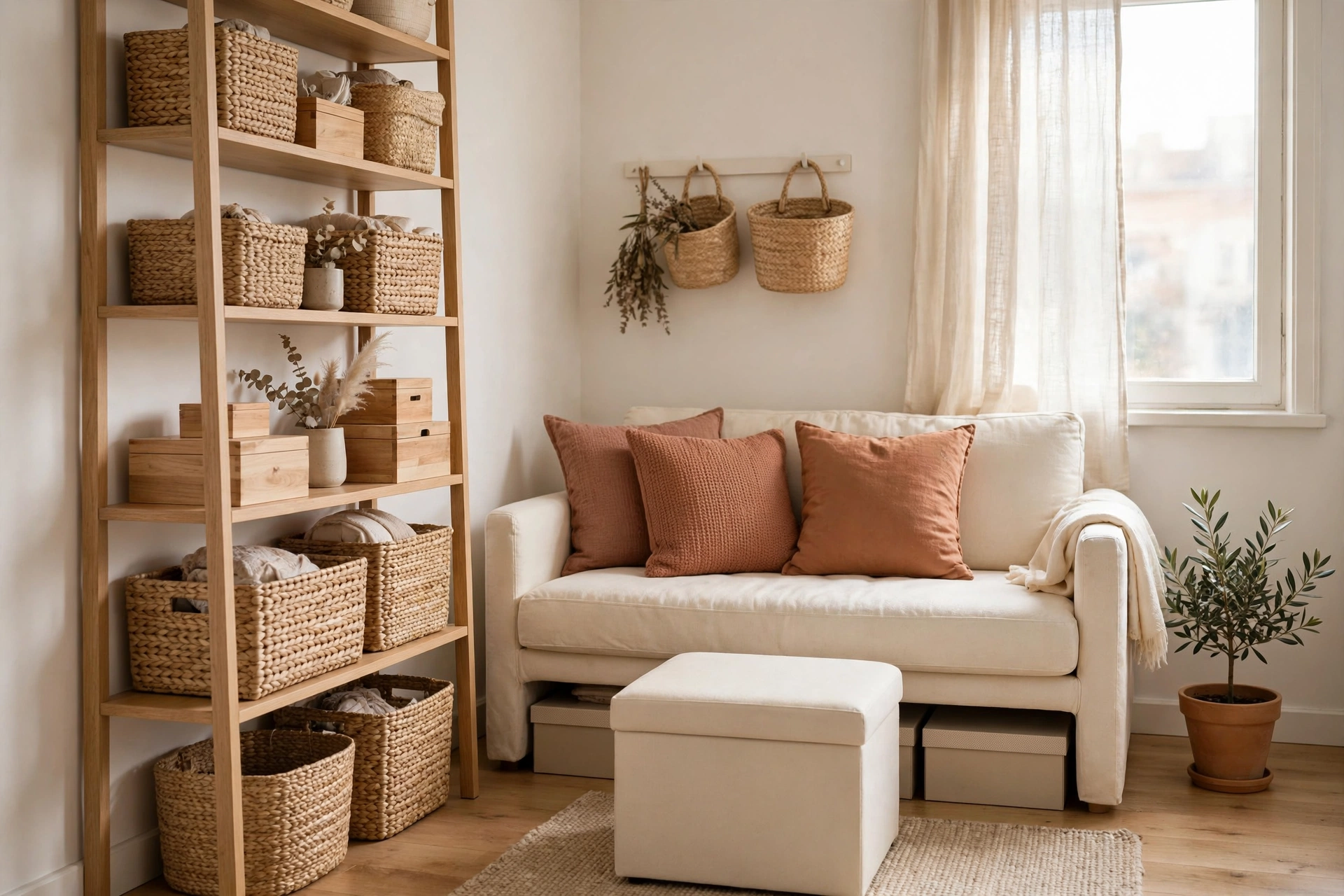
When square footage is fixed, every new piece must do two jobs. The heroes of the small living room: a storage ottoman (footrest, extra seat, blanket vault), a bench under the window (seating plus board games plus the spare duvet), and a sofa with even a shallow drawer or lift-up seat. Before buying anything for a small room, ask the only question that matters: what can it hold? If the answer is nothing, it has to be extraordinarily comfortable to earn its place.
5. Use the wall like it is floor space
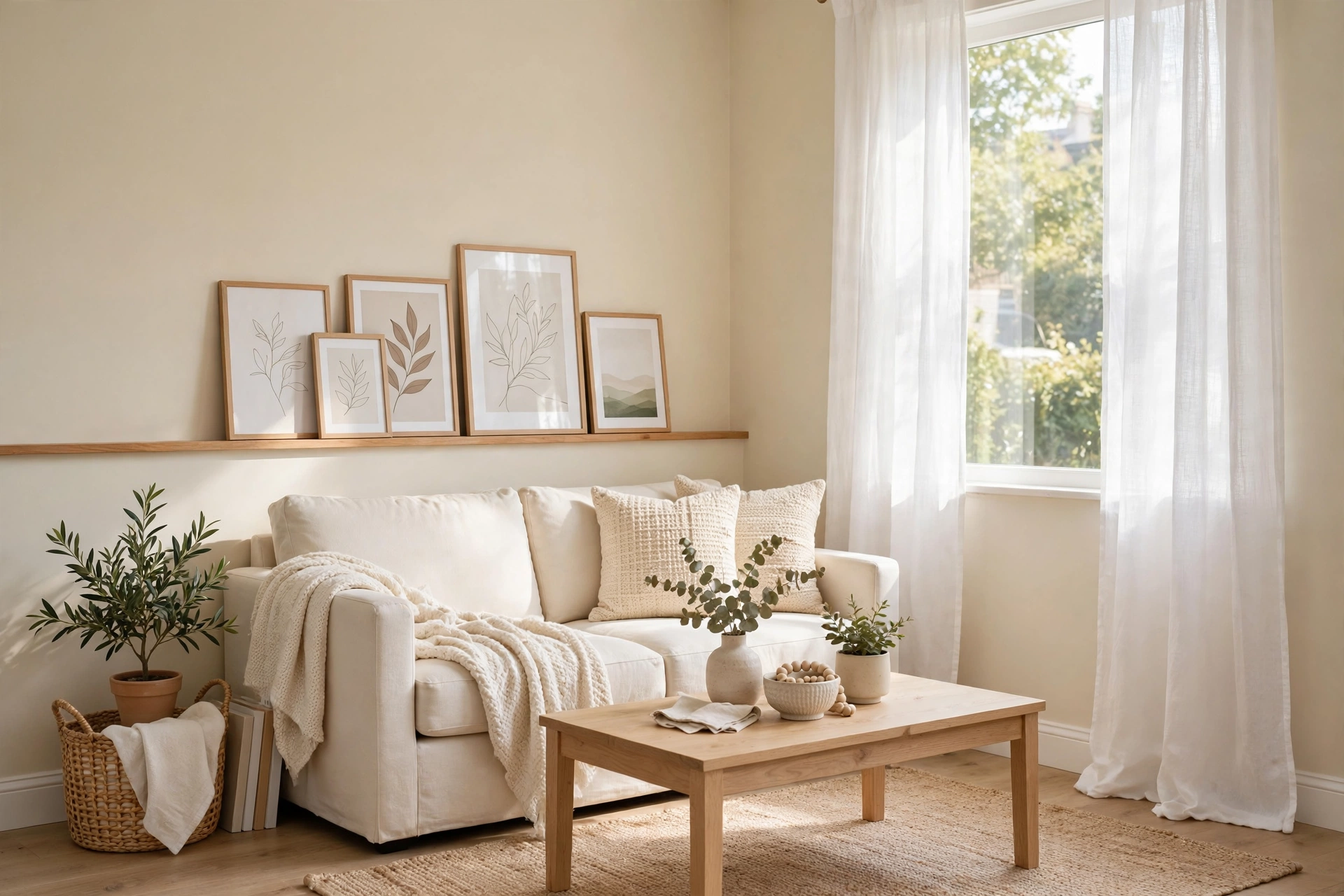
Floor space is spent; wall space in most small living rooms is nearly untouched. A single floating shelf above the sofa holds the books and plants currently colonizing the side tables. A narrow picture ledge turns a blank wall into a rotating display that takes four centimeters of depth. Hooks behind the door take bags, headphones and the dog lead. The rule: anything that can hang, should hang, the floor is for feet and furniture legs.
6. The under-sofa and under-furniture audit
There is a forgotten storage floor in every small living room: the ten centimeters under the sofa, the bed-frame gap, the space beneath the media unit. Flat, low boxes turn that shadow into a home for the things you need monthly, not daily, the gift wrap, the spare cables, the board games, the seasonal cushion covers. Measure the clearance before buying boxes; sofa legs lie about their height.
7. Cables: the invisible clutter
Nothing makes a small room feel chaotic like a nest of cables, because the eye follows lines. One cable box on the floor behind the media unit, one short velcro tie per device, and a charging station inside a drawer or basket will remove most of the visual noise in the room in under an hour. Chargers that live in the open multiply; chargers with an assigned drawer behave.
8. The landing strip by the door
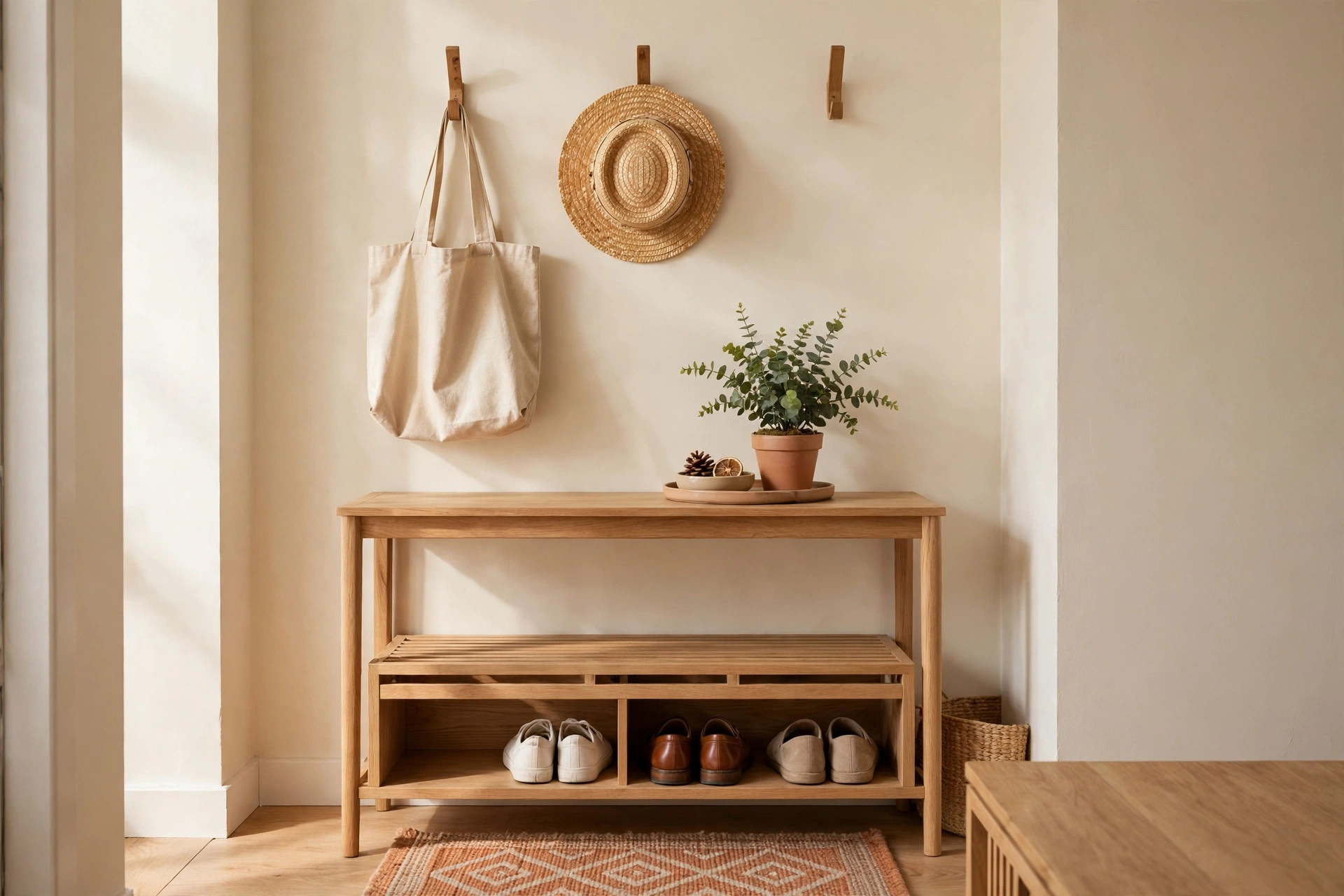
Most small living rooms are also the entryway, which means the room absorbs keys, mail, bags and coats the moment the door opens. Give the door a landing strip: two hooks, one small tray or bowl, one slim basket for shoes. That is the entire system, and it works because it catches things at the exact second they enter, instead of letting them migrate to the sofa arm.
9. One in, one out, the rule that keeps the systems alive
Every system above will slowly fail without one agreement with yourself: when something new enters the living room, something of similar size leaves it. A new throw means an old throw is donated. A new book joins the shelf only when one departs to a friend. In a small living room this is simply physics: the room holds a fixed volume of things while feeling calm, and every object past that volume is paid for in daily friction. The rule is not about minimalism or owning little. It is about keeping the total constant, so the zones keep working and the room you organized in October is still the room you live in next June. If letting go is hard, keep a “maybe” box in the under-sofa space for thirty days; almost everything in it will leave quietly, and the few things you rescue will have earned their way back.
10. The ten-minute reset ritual
Systems hold the room together; rituals keep the systems alive. The small-living-room reset takes ten minutes: blankets folded into their basket, surfaces cleared back to their trays, cushions karate-chopped, the empty tidy basket returned to empty. Done nightly, it means the room you wake up to is the calm one from the photos, not the archaeological dig. Done weekly, it still beats the monthly excavation most of us grew up with.
Organize for the life the room actually lives. A small living room does not need to hold everything, it needs to hold its things, in its zones, with lids on.
Where should you start this weekend?
Start with system 2 (trays) and system 3 (three baskets), together they cost almost nothing and change the room by Sunday lunch. Next weekend, audit the under-furniture space (system 6) and the door (system 8). Save the storage furniture (system 4) for when something genuinely needs replacing. Small rooms reward sequence, not shopping sprees.
Questions, answered
What is the first thing to organize in a small living room? +
The surfaces. In a small room, flat surfaces are the storage system of last resort, so clearing the coffee table, sofa arms and the top of every cabinet changes the room instantly. Give every item that lives on a surface a home inside something, a basket, a drawer, a tray, before buying any new furniture.
How do I hide clutter in a small living room without a closet? +
Use furniture that is secretly storage: an ottoman with a lid, a storage bench under the window, lidded baskets on open shelves, and the dead space under the sofa for flat items in low boxes. The rule is closed storage for everyday mess, open storage only for things that look good standing still.
How many storage baskets does a small living room need? +
Usually three: one for blankets and soft things, one for the daily drop (remotes, chargers, mail), and one that stays empty as a five-minute-tidy basket. More baskets than that and the baskets themselves become the clutter.
What is the biggest organization mistake in small living rooms? +
Buying organizers before removing anything. In a small room, every storage product takes up the space it is meant to save. Declutter first, measure second, buy last, and only for the categories that survived the declutter.
How much does it cost to organize a small living room? +
Less than most people expect. The first systems, trays and three lidded baskets, cost almost nothing if you start with trays and baskets you already own; bought new, a few decent baskets are usually the only spend of the first weekend. The real money sits in storage furniture (system 4), and that should only be bought when a piece genuinely needs replacing anyway.